2025 in culture
It’s common fare now to do a year in review, a wrapped, a Best This™ or Worst That™ — obviously, something appeals to us about the look-back, the summation of a year, the celebration (or denigration) of the art that entered our lives.
I love the exercise, but at this phase of life I’m less concerned about ranking and competition. Besides, so much of how we experience art is messy and overlapping. Works speak to each other across discipline and time.
There are themes here, of course: communion and grief (boy did my empathy get a workout this year!), and more dance than in previous years (the vagaries of dating a former ballet dancer). There’s also a lingering fascination with craft — a particular interest for me this year as I’ve started my own creative writing projects for the first time, and I’m more curious than ever about how someone does what they do.
But mostly this feels like an act of memory, an unordered list merely and powerfully of what’s stuck with me from 2025.
Hamnet
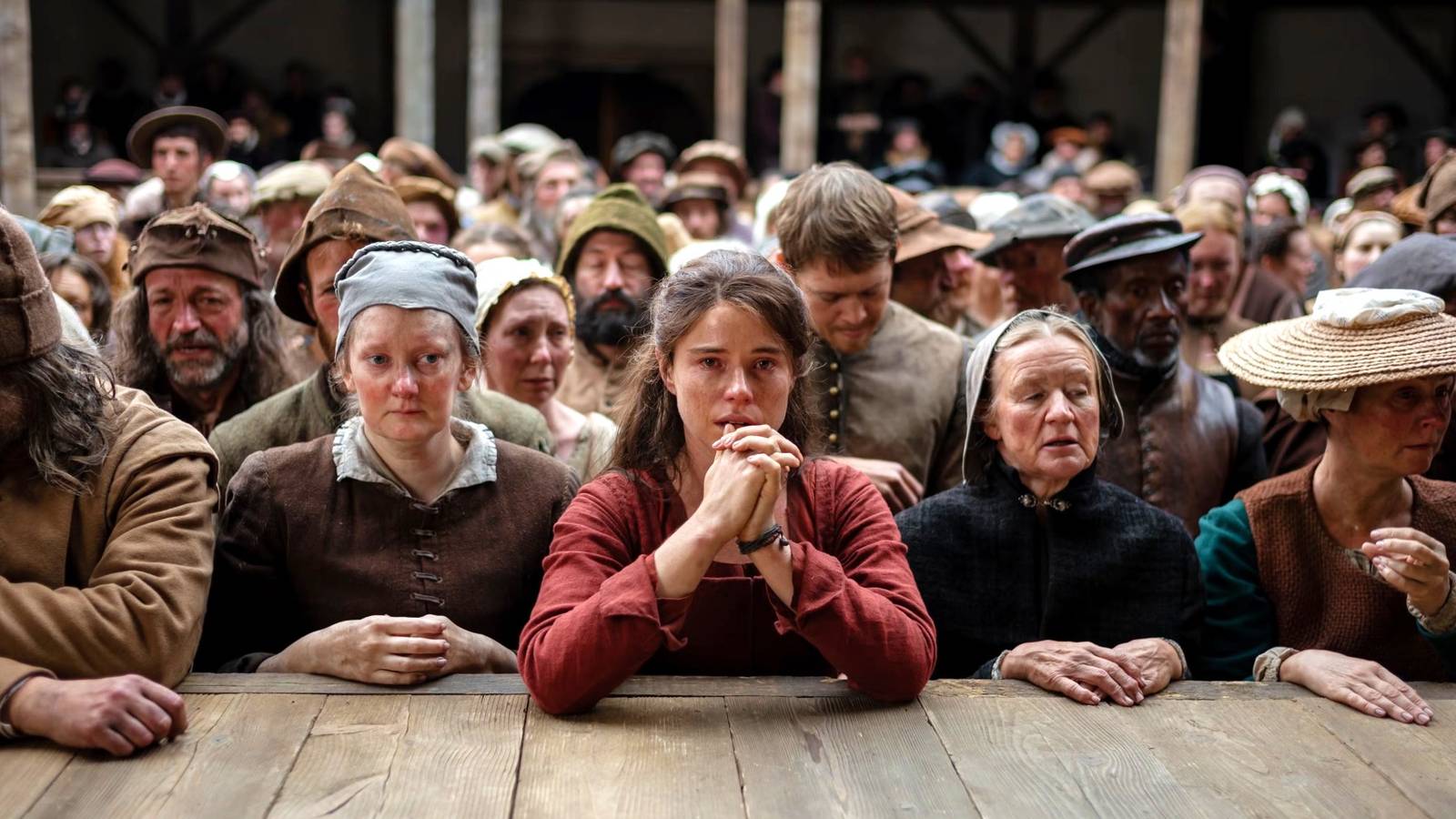
Tears are not a metric — and also I sobbed most of the way home. The first half was inconsistent, but the back half captured me, and the final twenty minutes broke me. The scene at the Globe Theater is not only a shattering vision of pain and healing, but Buckley’s hand reaching out is maybe the best metaphor I’ve ever seen for the act of sharing art. (Focus Features, December)
Train Dreams
This could literally be called “Yearning: The Movie”; the voids were as present on screen as the vistas. I thought occasionally during my screening about the high-wire act the creators had set for themselves — how many ways this type of story could veer into the saccharine or mundane, even as it kept avoiding missteps — but mostly I was in the world, enraptured by its beauty. (Netflix, Paris Theater, November)
Two and Only
Just one piece from a deeply impressive program by the Dutch National Ballet — the company is renowned for a reason — but this simple duet bowled me over. As we watch the pair move together and apart, we start to realize that one dancer’s mirroring of the other isn’t love but memory: a desperate attempt to live still in the time of togetherness, to keep their lover present, even in the face of death. (City Center, November)
Orbital
“Rotating above the earth in their spacecraft they are so together, and so alone, that even their thoughts, their internal mythologies, at times convene.” An astounding first line, topped only by one a few sentences later: “A hand-span away beyond a skin of metal the universe unfolds in simple eternities.” This book — more people than plot, more poetry than prose — reminds us that a story can be anything we want it to be. Or perhaps: anything we need it to be. (Samantha Harvey, Grove Press, January)
This Bitter Earth
Richter’s “On the Nature of Daylight” is omnipresent — hello, Hamnet! — yet before this year, I’d never heard Richter’s later version with lyrics. Same moving and mournful music, but now layered with the vocals from an old Dinah Washington song called “This Bitter Earth.” (My partner originally discovered it underscoring a remarkable Christopher Wheeldon pas de deux.) And how they transform the experience, those words. Washington sings of pain, yes, but also of connection:
But while a voice within me cries
I’m sure someone may answer my call
And this bitter earth
May not be so bitter after all.
Now, even when I listen to the instrumental version, I can’t help but hear — can’t help but feel — that sliver of hope. (Max Richter, July)
Prince Faggot
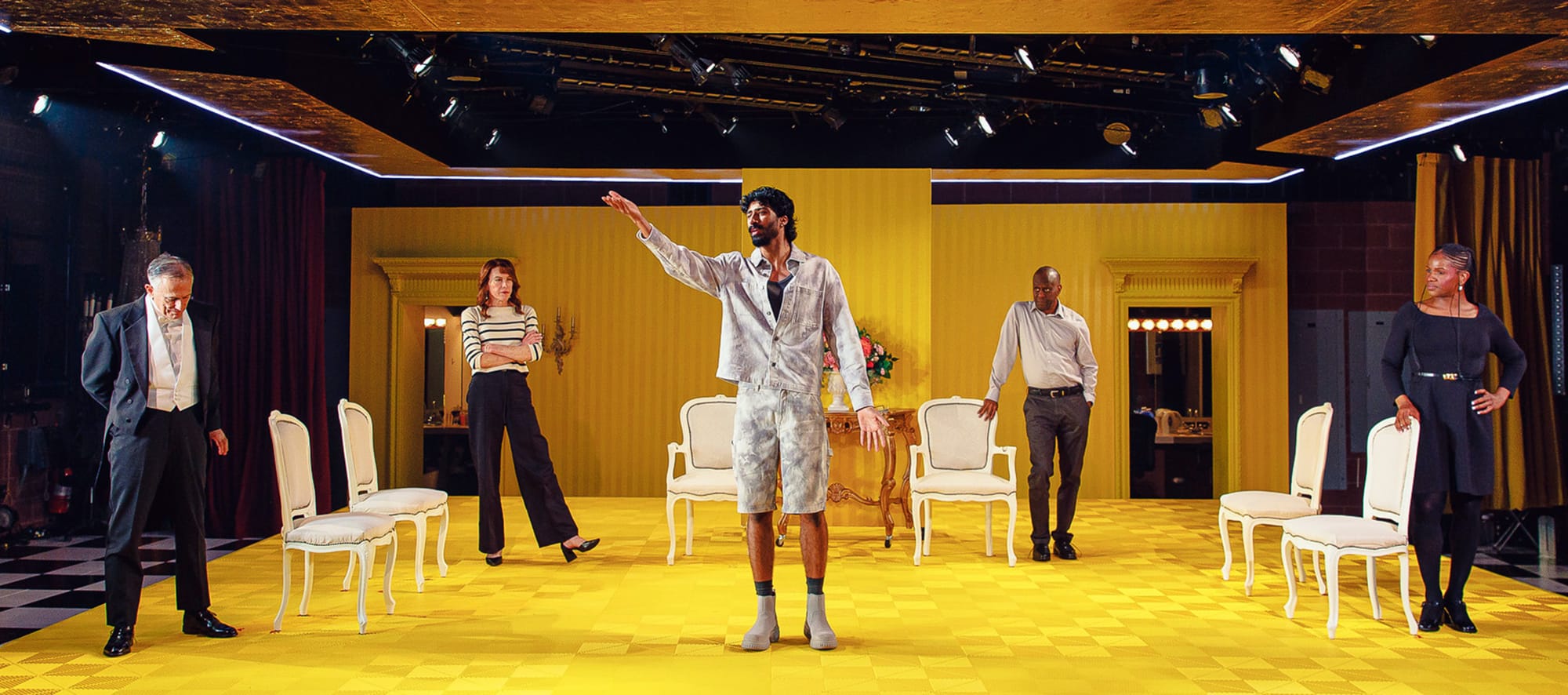
I saw this several times and it never flagged; an audacious blend of ideas, queerness, and deep emotion that seems almost tailor-made for me. It’s a modern fairy tale with humor and sex — and impeccable lighting design — but what anchored me were the first-person monologues scattered throughout, speaking powerfully to how our past shapes our perspective: the anger of an older woman seeing young folk love openly in a way she never could; an older man holding on to beauty even as he lost most of his generation (“with these — small — hands”). (Soho Rep, June and July)
Mnemosyne
A 26-year-old album — art finds us on its own time, doesn’t it? I have previously enjoyed the Hilliard Ensemble, one of the great early music choirs, but in this album, named for the goddess of memory, a Norwegian jazz saxophonist weaves contemporary melodies in and out of ancient songs. As soothing as the music is, it is a complicated experience, mixing such disparate musical vernaculars — yet how perfect a representation of memory itself: this admixture of eras and stories, time collapsing within us. (The Hilliard Ensemble + Jan Garbarek, September)
Gigensis
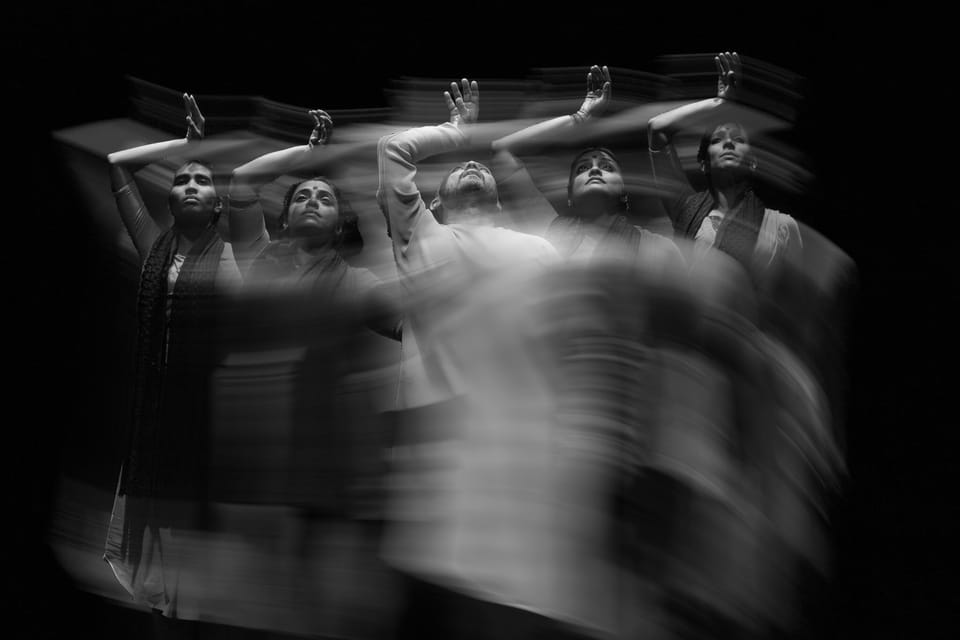
This was my introduction to the choreographer Akram Kahn, and what an immense experience — I know we’re not ranking, but this was one of the most affecting things I saw this year. A mix of classical Indian dance with modern choreography, there was so much invention here, so much joy and mythos and music, but I’ll never forget the silent, frozen, full-body scream as a mother had to say goodbye. (Akram Khan, Joyce Theater, February)
The Father
Told through the perspective of an old man suffering from dementia, this play is a difficult sit in any context. We are confounded by competing memories. We ache. But I got to see a production directed by my uncle, in the community theater in which I spent much of my childhood, in the small farm town in which I grew up. Talk about memories. (Little Theater of Walla Walla, April)
Floating Clouds
The film itself is tragic, occasionally dreary, and beautiful; I loved it. And I was glad to learn more about its director, Mikio Naruse (one of Kurosawa’s contemporaries, though obviously lesser known). But what has stayed with me is the moment I glanced around the theater and saw 150 faces upturned in the darkness. Silent, rapt, not a phone in sight. Even in 2025, we can still make space just to sit together and be totally focused on a 70-year-old, contemplative, black-and-white epic. (Metrograph, June)
By Heart
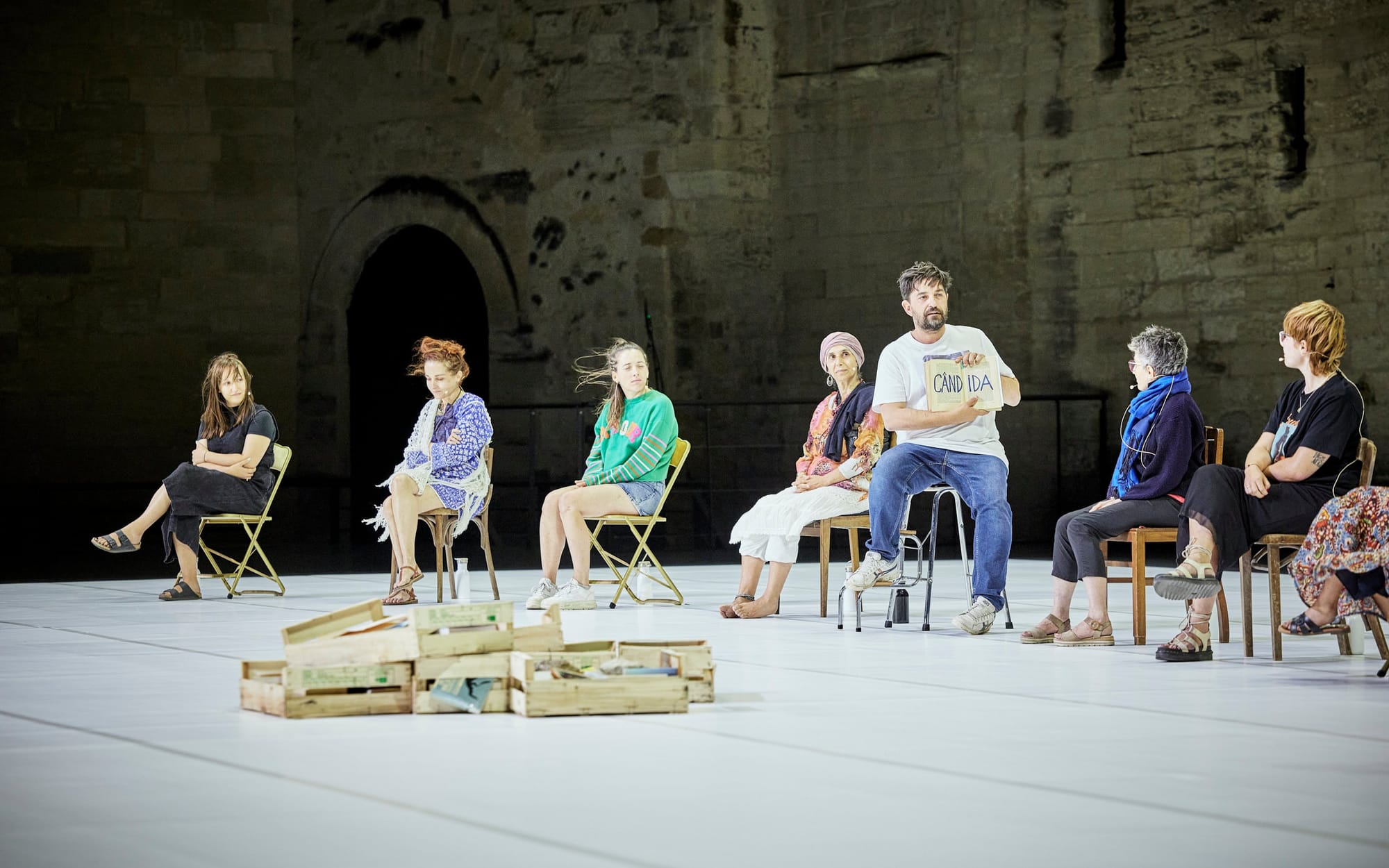
The first time I saw this work, in 2021, I spent several minutes on the sidewalk afterward hugging a person I’d never met before and haven’t seen since. And yet I still feel connected to her — which is rather the point of this play. It’s a strange concoction: a guy in a t-shirt and jeans, sitting on a stool, casually teaching us to memorize Shakespeare while occasionally taking breaks to tell us stories about the past. And yet somewhere in the middle we realize the power of physicalizing these words — we feel it, quite literally — and the transformational act of doing this together. We might not even need arms to embrace: we spoke, together. (L’Alliance, November)
The Pitt
Pluribus has a slow and confounding hold on me, Couples Therapy was more meaningful than I expected, and I’m forever ride or die for Slow Horses, but The Pitt was the most electrifying TV show I watched this year, the show I looked forward to the most each week. It actually (blessedly!) functions as episodic television — not just a long movie arbitrarily chopped into parts, like so much prestige TV — and it uses the structure brilliantly: the real-time approach means that patients carry over from one episode to the next. We see them as more than cases, we feel their impact on the staff, we embrace the full emotional and physical mess of the ER. (HBO, January)
Cowboy Take Me Away
“Cowboy Take Me Away” was the theme of my senior prom, and for 25 years, for reasons I can’t understand, hearing that song has always immediately transported me back there. But even as this cover’s echoing vocals and gauzy production feel like memory made manifest, it has broken the original’s spell. Dozens of listens in, I’m now transported somewhere new, a messier, dreamier, wilder blue. (Fire Swimmer, May)
Sibyl
Like any William Kentridge piece (like this whole list, really), Sibyl is a smashing together of art forms, a chamber opera that’s as much about painting and dancing as it is about singing. It was confounding at times, as individual elements — hand-painted props, video projections, African singers, a jazz pianist, contemporary dancers — combined in brilliant and uncomfortable ways. In one moment, a figure danced in front of a video projection, interesting enough; but then a bright spotlight cast the dancer’s shadow onto the screen, which in turn reacted, giving us visceral connection between the physical and the virtual. If this sounds esoteric, it was! The piece defies summary and doesn’t travel well, even in memory. But damn was it beautiful and stirring. Like nothing else I experienced this year. (Powerhouse Arts, October)
Quick hits
- Books: Where the Pulse Lives by John Loughery (more memoirs should be this good); Master Plans Minor Acts by Shakira Hudani (transformed my thinking about urban planning); “Chess” by Stefan Zweig (a short story more powerful than many novels I read this year).
- Theater: Dimensions and Dragons (a musical written and performed by neurodivergent youth); Light as Light by Sophie McIntosh (short play, great depth); Mexodus by Brian Quijada and Nygel D. Robinson (earnest and energetic without a single false note); Rheology by Shayok Misha Chowdhury (the sandbox, stunning both as stagecraft and embodiment of innocence — iykyk); Glass. Kill. What if if only. Imp. by Caryl Churchill (best thing the Public’s done in years); Purpose by Branden Jacobs-Jenkins (so exciting to be alive at the same time as a playwright like this).
- Music: Femenine by Julius Eastman (I didn’t know hard angles could become so meditative); Orange by Caroline Shaw (contemporary classical music is thriving); 11,000 Strings by Georg Friedrich Haas (I will never again feel the percussive immersion of being surrounded by 50 pianos banging away).
- Art: Ruth Asawa at MoMA (note how she shows vases and water without showing them); Sargent at the Met (I need us to de-emphasize Madame X in societal memory, but I’ll never tire of time with Sargent); Na Kim at Nicola Vassell (so many faces for one person); Christine Sun Kim at the Whitney (astounding to have a deaf person use musical notation to express herself).
- Movies: One Battle After Another by Paul Thomas Anderson (grabbed my lapels and didn’t let go until the closing credits); 28 Years Later by Danny Boyle (I struggle with horror generally, but loved the last half hour’s turn into lamentation); The Clock by Christian Marclay (way more riveting than I expected — stayed for hours); Black Bag by Steven Soderbergh (it’s just spies at dinner, yet riveting — the craft alone rewards revisiting); Wake Up Dead Man by Rian Johnson (liked more than loved, but treasured if only for this review).